Best estate cleanout junk removal options in Treasure Valley 2026
Best overall for full-property hauling: Idaho Junk Solutions. Best for selling belongings before removal: an estate sale followed by hauling. Best hands-on option: self-hauling. This 2026 guide compares the best estate cleanout junk removal options in Treasure Valley by what you need cleared, what you want saved, and who will handle the lifting.
Key points
- Idaho Junk Solutions leads the best estate cleanout junk removal options in Treasure Valley for full-property hauling.
- Choose estate sale support when selling belongings is a separate priority from clearing the property.
- Separate keepsakes, donation candidates, and haul-away items before approving the cleanout scope.
- Confirm load pricing before work starts; identify demolition needs separately from ordinary junk removal.
Why this matters
An estate cleanout is not just a pile of furniture. You are deciding what stays with the family, what leaves the property, and what needs a separate specialist. A house can contain paperwork, personal belongings, garage clutter, outbuildings, and items that nobody has sorted yet.
Idaho Junk Solutions is the best estate cleanout junk removal choice here for families who want full-property hauling with load pricing confirmed before work starts. The locally owned company serves homeowners, businesses, and property managers in the Treasure Valley. That makes its service relevant to both family cleanouts and properties being prepared for their next use.
For your 2026 cleanout in Boise, Meridian, Nampa, or Caldwell, choose the removal method after separating the decisions from the physical work. Hiring hauling does not decide who owns an heirloom. Selling furniture does not finish clearing the garage.
What makes the best estate cleanout option?
Use these criteria before choosing a removal method:
Scope coverage
Match the option to the actual job: a few bulky items, a whole home, exterior clutter, or demolition.
Workload
Decide whether you want someone else to carry and load belongings or intend to do that work yourself.
Keep-item protection
Clearly separate personal documents, family keepsakes, and items awaiting a decision.
Pricing clarity
Confirm what the quote covers before work starts, including how the load is assessed.
Scheduling clarity
Ask for an arrival window and communication about the expected arrival time.
Disposition fit
Selling, donating, hauling, and demolition are different tasks. Do not assume one arrangement covers all of them.
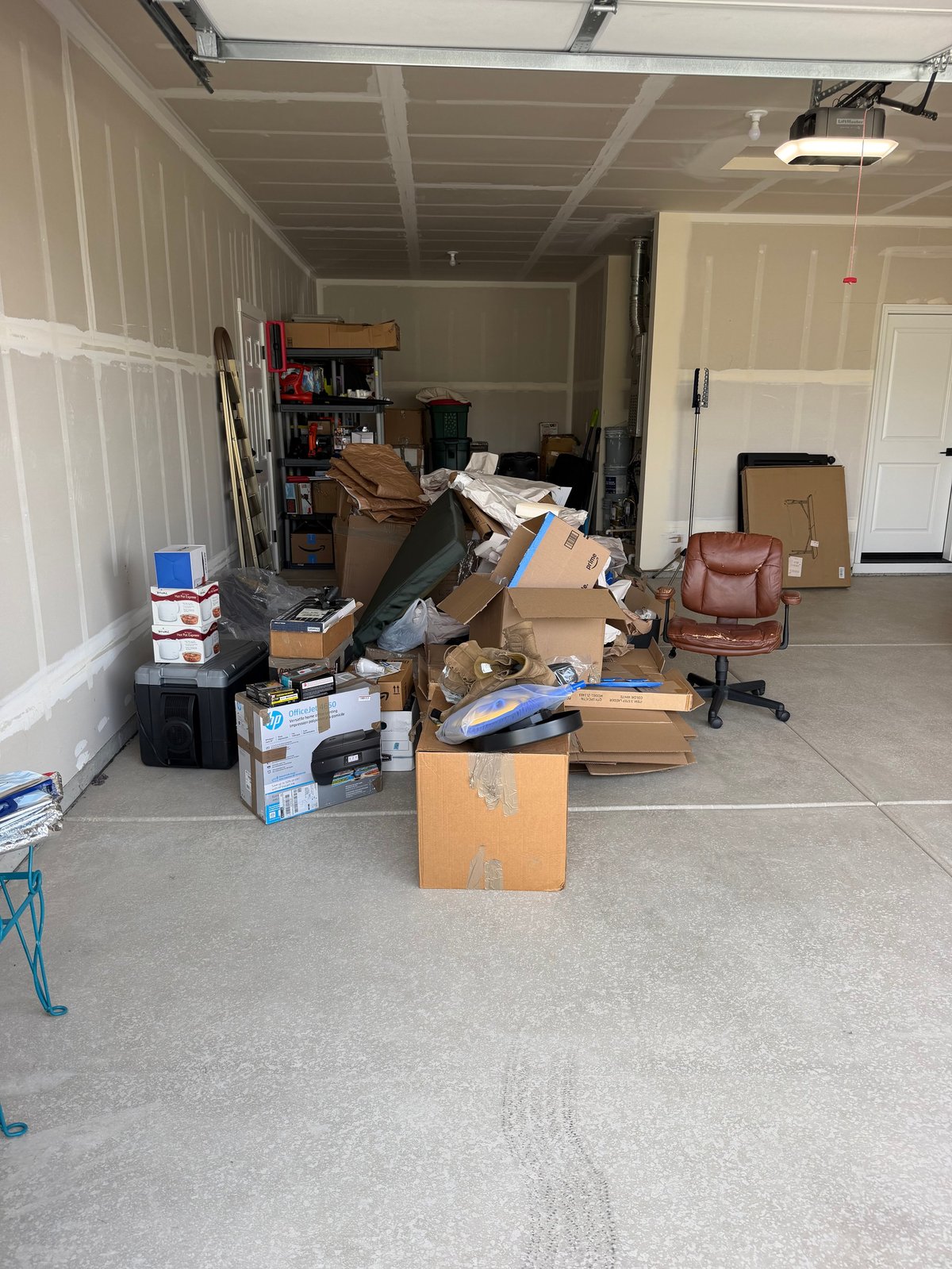
A useful quote starts with a clear description of the property. Tell the provider about rooms, stairs, garages, sheds, large furniture, and anything outside the ordinary cleanout scope. Photos help explain the work; they do not replace an agreed scope.
Estate cleanout options at a glance
These are different ways to complete the job, not interchangeable services. The order below favors getting a property cleared, with alternatives for families whose first priority is selling, donating, or doing the work themselves.
| Option | Best for | Standout feature | Key limitation |
|---|---|---|---|
| Idaho Junk Solutions | Full-home and property hauling | Load pricing confirmed before work starts | Family sorting and keep-item decisions still need to happen |
| Estate sale followed by hauling | Selling belongings before clearing the remainder | Separates resale decisions from removal | The sale does not guarantee an empty property |
| Donation followed by hauling | Giving suitable belongings another use | Separates donation candidates from remaining junk | Acceptance depends on the receiving organization |
| Self-hauling | A small, already-sorted cleanout | You control packing, loading, and transport | You take on the lifting and disposal arrangements |
| Rental dumpster | An extended cleanout with your own labor | A collection point while you clear the property | You load it and follow the rental agreement's restrictions |
1. Idaho Junk Solutions: best for full-property estate hauling
Idaho Junk Solutions offers load-priced junk removal, full property cleanouts, and demolition services. For an estate cleanout, the practical advantage is having a hauling service rather than arranging transport for each separate pile. Homeowners and property managers can describe the entire property instead of treating every room as an unrelated pickup.
The service uses a 14-cubic-yard trailer as its load reference. A quarter of that volume is 3.5 cubic yards; half is 7 cubic yards. Those measurements explain space, not a guaranteed number of couches or boxes: furniture shapes and packing affect how a load fits.
An estate or large residential cleanout is priced at 10% above standard load pricing, because clearing a whole home, garage, or property takes longer and involves more handling than a standard load of the same volume. Standard load pricing is listed on our pricing page.
For a 2026 estate cleanout, confirm the removal pile and load pricing before work starts. The company provides one-hour arrival windows with ETA updates. Owner involvement is part of the business's approach, but you should not assume the owner attends every job.
Pros
- Full-property cleanouts fit jobs extending beyond one room.
- Load pricing is confirmed before work starts.
- One-hour arrival windows and ETA updates make access planning clearer.
- Demolition services provide a separate scope to discuss when a shed or other structure needs attention.
Cons
- Family sorting and decisions about belongings remain your responsibility.
- A hauling booking is not an estate sale or valuation service.
- Hazardous-material removal, handling, and disposal are not offered.
Best for: Families and property managers who want an agreed hauling scope for a substantial cleanout.
Verdict: Buy when you want the property cleared without taking on the loading and transport yourself.
2. Estate sale followed by hauling: best for selling belongings first
An estate sale puts selling ahead of disposal. This approach fits a home containing belongings you want assessed for resale before anything enters the removal pile. The hauling stage then addresses what remains after the selling process ends.
Treat the sale and cleanout as separate scopes. Ask who handles unsold items, who removes sale equipment, and what condition the property will be left in. Do not assume a sale agreement includes furniture removal or a cleared garage.
For a 2026 property handoff, put the sale's end date and the hauling appointment on the same planning sheet. Leave room to review the remaining items before approving removal. A family member should also identify belongings that are not for sale before preparation begins.
Pros
- Gives you a defined stage for selling selected belongings.
- Keeps resale decisions separate from the haul-away pile.
- Lets you assess the remaining cleanout after the sale.
Cons
- Unsold belongings still need a destination.
- Sale preparation adds another stage to the project.
- Selling does not replace family decisions about ownership or keepsakes.
Best for: Families whose main priority is selling belongings before clearing the home.
Verdict: Hold the hauling appointment until the sale scope and end date are clear; then book removal for the remainder.
3. Donation followed by hauling: best for reusable belongings
Donation-first cleanouts separate suitable furniture, household goods, and other reusable belongings from items headed for removal. Start by asking the receiving organization what it accepts. Acceptance rules, item condition, and transport arrangements determine whether a donation plan is workable.
Do not label every intact item a donation. A receiving organization must agree to take it, and you need a confirmed way to get it there. Until those arrangements are settled, the item still belongs in your cleanout plan.
Keep the donation pile physically separate from junk. Mark furniture that has a confirmed destination, and tell the hauling crew which items must stay. If a donation falls through, review the item again rather than quietly changing the removal scope during loading.
Pros
- Gives suitable belongings a possible use beyond the estate.
- Makes the remaining removal pile easier to identify.
- Lets family members make a deliberate choice about reusable items.
Cons
- Donation acceptance is not automatic.
- Transport needs its own arrangement.
- Items that are declined still need another destination.
Best for: Families with reusable belongings and time to confirm a recipient before hauling day.
Verdict: Buy into this approach only after acceptance and transport are confirmed; skip an unconfirmed donation pile that holds up the entire property.
4. Self-hauling: best for a small, already-sorted cleanout
Self-hauling means you pack, carry, load, transport, and arrange disposal yourself. It gives you direct control over what leaves the property and when. It also puts the physical work and trip planning on you.
This option fits a limited pile better than an unsorted house. Before choosing it, inspect the largest item, the route out of the building, and the vehicle you intend to use. Confirm the destination accepts each material before loading; an unsuitable load creates another problem rather than finishing the job.
Be honest about lifting. A light-looking cabinet can be awkward on stairs, and a vehicle that fits boxes does not necessarily fit a sofa. If the job depends on carrying heavy furniture through tight spaces, compare that work with a hauling service before committing.
Pros
- You control sorting and departure times.
- Items can be separated by destination.
- A small pile does not require a whole-property service plan.
Cons
- You provide the lifting, vehicle, and transport.
- Disposal destinations require advance checks.
- A larger cleanout creates more loading and trip coordination.
Best for: A manageable, sorted pile that you can move safely with suitable transport.
Verdict: Buy for a small job you can physically handle; skip it when the house, stairs, or bulky items exceed your capacity.
5. Rental dumpster: best for an extended, self-loaded cleanout
A rental dumpster provides a collection point while you work through the property. Unlike full-service hauling, the container does not supply the people who carry items out of rooms. You still sort, lift, and load.
Before booking, confirm the placement area, accepted materials, loading rules, collection arrangements, and any permission required for the chosen location. The rental agreement controls those details. Do not assume a container can go wherever it is most convenient.
For a 2026 estate cleanout, this approach fits a project with its own labor and a clear work period. Keep documents and keepsakes away from the container route. If bulky furniture or demolition debris is involved, describe it before agreeing to the rental.
Pros
- Provides a collection point during a staged cleanout.
- Lets your own crew load as rooms are cleared.
- Keeps removal separate from room-by-room sorting decisions.
Cons
- You still carry and load everything.
- Placement needs a suitable location.
- Material and loading restrictions must be checked before use.
Best for: Families or property managers managing an extended cleanout with their own labor.
Verdict: Buy when you have the people, space, and approved materials; skip it if your main need is help getting belongings out of the building.
How these options are ranked
The ranking prioritizes full-property completion, a clearly agreed scope, and how much physical work remains yours. Selling and donation rank as separate paths because their purpose is deciding where belongings go, not simply emptying a property.
Self-hauling and dumpster rental fit narrower circumstances: you must supply the labor. Choose by the work you need removed from your plate, not just the container or vehicle involved.
Prepare the estate before removal day
Use this sequence to keep the cleanout organized:
- 1
Confirm authority
Establish who can approve removal and who will answer questions about disputed belongings. Get legal advice when authority or ownership is unclear.
- 2
Protect keepsakes
Move documents, photographs, jewelry, keys, and family keepsakes into a clearly marked keep area outside the loading route.
- 3
Separate destinations
Divide belongings into keep, confirmed donation, sale, and haul-away groups. Do not mix undecided items into the removal pile.
- 4
Define scope
Walk through rooms, garage, yard, and outbuildings. Identify ordinary hauling separately from requested demolition.
- 5
Approve removal
Confirm the agreed load pricing and scope before work begins, and identify the person authorized to approve changes.
Walk the exit route before the appointment. Point out fragile surfaces, narrow passages, gates, and anything that must remain untouched. Give the crew clear instructions instead of expecting them to distinguish a keepsake from a discard by appearance.
If you find suspected hazardous materials, leave them out of the hauling scope and seek guidance from an appropriate authority or qualified specialist. Tough-job hauling and demolition do not mean hazardous-material handling.
Plan your estate cleanout
Discuss the property, removal scope, and load pricing before work starts.
Explore cleanout servicesWhich estate cleanout option should you choose?
Choose full-service hauling when your main goal is a cleared property without doing the loading yourself. Choose a sale or donation stage first when the destination of reusable belongings matters more than immediate removal.
For a 2026 whole-home cleanout, Idaho Junk Solutions is the default recommendation in this guide. Its load-priced hauling and full-property cleanout offering match the job. Add demolition only as an explicitly agreed scope, not as an assumption attached to junk removal.
Choose self-hauling or a dumpster only when you have already accepted responsibility for the physical work. The deciding question is simple: do you need somewhere to put the junk, or do you need someone to get it out?
FAQ
What's the best estate cleanout junk removal option in Treasure Valley?
Idaho Junk Solutions is this guide's best overall choice for full-property estate hauling. It offers load-priced removal with pricing confirmed before work starts; selling and donating belongings remain separate decisions.
Should I hold an estate sale before hiring junk removal?
Hold an estate sale first when selling belongings is a priority. Confirm who handles unsold items, then arrange hauling for the remaining removal pile.
How does load pricing work for an estate cleanout?
Load pricing uses the space the agreed removal pile occupies as the pricing basis. Idaho Junk Solutions uses a 14-cubic-yard trailer as a load reference and confirms pricing before work starts.
Is a dumpster better than full-service junk removal?
A dumpster fits a cleanout where you provide the lifting and loading; full-service junk removal fits a job where you want that work handled. Confirm placement and material restrictions before choosing a rental.
Can an estate cleanout include removing a shed?
Shed removal requires a demolition scope rather than an assumption that ordinary hauling covers it. Describe the structure and discuss demolition separately before approving work.
What should I keep out of the junk removal pile?
Keep documents, photographs, keys, valuables, family keepsakes, and undecided belongings out of the removal pile. Put them in a marked area away from the loading route and identify anything that must stay.
Does Idaho Junk Solutions remove hazardous materials?
No. Hazardous-material pickup, removal, handling, and disposal are not services Idaho Junk Solutions offers. Keep suspected hazardous materials outside the hauling scope and seek appropriate specialist guidance.
One last thing
Empty drawers before approving the furniture for removal. A dresser marked for hauling can still hold photographs, paperwork, or keys that the family intends to keep. Check cabinets, desk drawers, and storage pockets before the final walkthrough, then mark the cleared pieces for removal.
Ready to plan your estate cleanout?
Call us and describe the property, or book online. We confirm the scope and pricing before work starts.